


Freddy Playground Sandbox
3.51.00 Reviews
App Specs
- Version
- 1.0
- Updated On
- License
- Free
- Downloads
- 100,000+
- Developer
- Big Host Africa
- Categories
- Simulation
- Platform
- Android
Screenshots
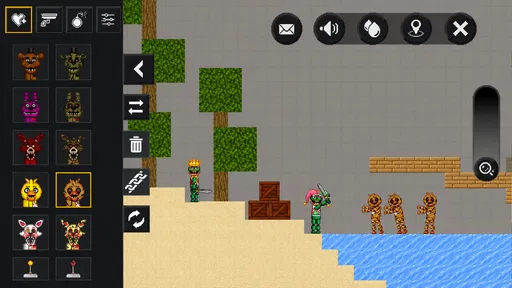
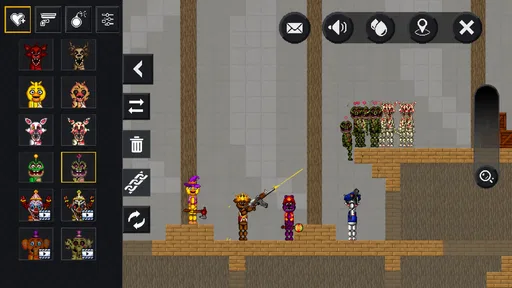
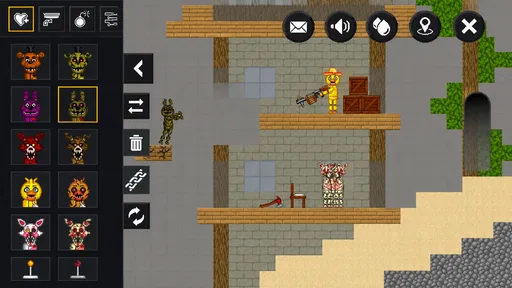
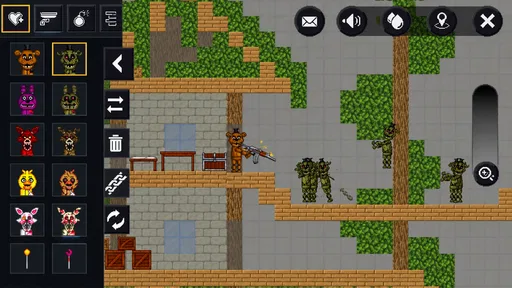
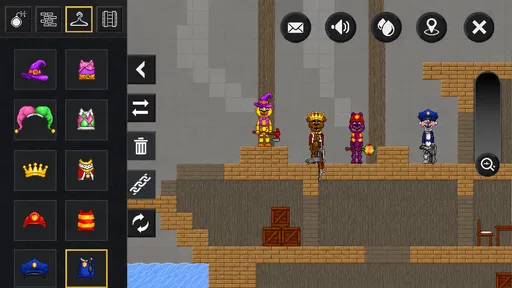
 Analysis by AppCompare
Freddy Playground Sandbox is best approached as a game for short, curious experiments rather than a simulation with a long-term plan. I would open it when I have a few spare minutes and want to see how a playful scene behaves, not when I am looking for a detailed story, realistic management, or a carefully structured campaign. Its appeal is the freedom to try things and enjoy the unexpected results.
That distinction matters for a first-time player. Sandbox games can feel open-ended in a good way, but they can also leave you wondering what you are supposed to do. Here, the most useful mindset is to treat each challenge as a starting point and the ragdoll physics as part of the fun. If you are comfortable learning by experimenting, the game has an inviting premise; if you need clear instructions and steadily unfolding goals, its open-ended approach may feel less satisfying.
What to expect from this physics playground
This is a free simulation game from Big Host Africa, built around a playground-style sandbox, physics-driven characters, and challenges. The idea is less about precise realism than about interacting with a scene and seeing what happens. Ragdoll movement gives small actions a comic, unpredictable quality, which is a good fit for players who enjoy amusing outcomes as much as completing an objective.
Its store rating averages 3.5 from around 34 ratings, while the game has passed 100,000 installs. Those figures suggest that it has reached a sizeable audience, but they are not a guarantee that its style will suit everyone. With just one written review, there is little public commentary to clarify what players tend to enjoy or find frustrating. I would judge it on whether you like physics-based sandbox play, rather than treating popularity as proof of depth.
The first practical question is whether you want a game that tells you exactly what to do. The challenges offer some direction, while the sandbox concept invites you to explore beyond a single prescribed result. That combination can be a strength: a challenge gives you a reason to begin, and experimentation lets you find your own way through it. It can also feel loose if you expect every action to lead into a clearly explained next stage.
Compared with a conventional platformer, Freddy Playground puts less emphasis on precise jumps and a continuous route through levels. Compared with a management simulation, it is not primarily about planning an economy, maintaining a roster, or building toward a detailed long-term target. Its closer appeal is the immediate feedback of a physics playground: do something, watch the scene react, and decide whether the result was entertaining or whether you want to try again.
Getting started without overthinking it
The game is listed as free, has an Everyone age rating, and is currently at version 1.0. It requires Android 7.0 or later. Those details make it straightforward to assess basic compatibility before installing, but they do not tell you how a particular phone will feel in use. If your device is older or you are sensitive to awkward controls, keep your first session short and see whether moving around and interacting feels comfortable before settling in for a longer play session.
Worth Reading Before You Choose

Flipboard Shows What News Apps Must Do Beyond the Feed

Switching to Android Auto Means Rethinking Your Driving Routine

Google Calendar Makes a Crowded Week Easier to Manage

Ludo King Makes the Most of the Minutes Between Plans

Baby Panda World Brings Quick Play to Modern Phones, but Its Game Library Feels Busy

ESPN’s Live Game View Makes Following Close Games Easier
Once you launch, I recommend resisting the urge to search for a complicated strategy immediately. First, get a feel for the scene: notice what can be approached, what appears to respond, and how the ragdoll behavior changes the result of an action. This is a more useful first step than trying to invent a grand objective before you know how the game communicates its interactions.
For a reassuring first run, choose one nearby thing to investigate and change only one part of the situation at a time. If you alter several things at once, an unexpected result may be funny, but it will be harder to tell what caused it. A simple one-action, one-observation rhythm helps you learn the game’s logic without turning the opening minutes into guesswork.
That small habit is particularly useful in a physics game. Ragdoll motion can make outcomes seem chaotic, but chaos is easier to enjoy when you can recognize the action that set it off. I would treat early attempts as informal tests: try something, watch the response, and repeat it once before adding another idea. It creates a clearer sense of cause and effect while keeping the mood playful.
Before you begin, it also helps to decide what would count as a satisfying first session. You might want to understand one interaction, finish a challenge, or simply find a reaction that makes you laugh. Picking a modest target makes the open-ended format feel less like a test with hidden rules. It also gives you a natural stopping point, which is useful when you are sampling a new game rather than planning a long session.
Your first satisfying result
A first meaningful success does not need to be a perfect score or a difficult challenge. I would count it as success when you have made one deliberate interaction, seen how the character or scene responds, and understood enough to repeat or modify the action. That moment turns the game from an unfamiliar screen into a playground you can explore with a purpose.
When a challenge is available, use it as a gentle test rather than a pass-or-fail exam. Read the goal in practical terms, make one attempt, then decide what you learned from the result. If the outcome is not what you expected, change one part of your approach instead of starting over with a completely different plan. This makes retries informative, not merely repetitive.
There is also value in setting a small personal objective when you are not focused on a challenge. For example, see whether you can reproduce a funny ragdoll reaction, or find a different way to approach the same kind of interaction. These self-made experiments suit a sandbox better than waiting for the game to provide a lengthy checklist. They are especially helpful for a quick session when you want a clear reason to play but do not want to commit to a big goal.
A realistic everyday use is a short break between other tasks. I would open it, try one challenge or experiment, and stop when the result has run its course. That works well if you want a light distraction with room for surprise. It is less ideal if you need a game that saves a long chain of progress or gives you a strong narrative reason to return; the appeal described here is immediate play, not a deep ongoing commitment.
There is a practical way to make those short visits feel more purposeful: keep a tiny mental note of what you have already tried during that session. If you have tested one interaction, make the next attempt deliberately different rather than repeating it without a reason. You do not need to turn play into a checklist; the point is simply to avoid spending your available break on the same uncertain action several times. This approach suits the game’s experimental nature and helps each attempt teach you something.
Where the fun can turn into confusion
The main friction for a new player is the same quality that makes a sandbox attractive: freedom can leave you unsure what to do next. Challenges help provide direction, but a player who expects a tutorial to explain every interaction may find the learning curve less comfortable. If you feel stuck, narrow your focus. Try a single action, observe the response, and use that information to make the next attempt more deliberate.
Physics can also make repeat attempts feel inconsistent. A ragdoll result may be amusing precisely because it is not perfectly controlled, yet that unpredictability can frustrate someone who wants exact, repeatable movement. I would not choose this game as my main option for precision-based play. If your satisfaction depends on executing the same move identically each time, a tightly controlled platformer or puzzle game is likely a better fit.
Another possible mismatch is the difference between novelty and lasting variety. A playground can be entertaining to revisit, but that does not automatically mean every session will feel meaningfully different. The challenges can give you a reason to test yourself, while self-directed experiments extend the fun only if you enjoy making your own goals. Players who prefer a steady stream of explicit objectives should keep that trade-off in mind.
It is also worth separating the game’s broad premise from expectations of a realistic simulation. The category label may lead some people to expect detailed systems or practical scenarios, but the central attraction here is playful physics and challenge-based sandbox activity. I would approach it as a casual game first. That framing makes the unpredictable reactions feel like part of the point instead of a substitute for a more structured simulation.
When an attempt does not go as planned, I would avoid treating every odd result as a mistake to correct. In a ragdoll playground, an unexpected movement can be the most entertaining outcome, even if it does not solve the challenge. The useful distinction is whether you are exploring freely or trying to meet a specific goal. For a challenge, adjust one choice and retry; for casual play, let the surprise stand and use it as a prompt for a different experiment.
Who will enjoy it, and when another game fits better
I would recommend giving it a try if you like games where experimenting is part of the objective, enjoy slapstick physics, and do not mind setting your own small goals. It may also suit someone who wants a casual game for brief sessions, particularly if completing one challenge or testing one interaction feels like enough. The age rating is Everyone, which makes the content classification broad, though individual preferences about game style still matter.
I would skip it if you are looking for a story-led adventure, complex simulation systems, or precise controls that reward exact timing. It may also be a poor match if open-ended play feels like a lack of direction rather than freedom. In those cases, a level-based action game or a more structured simulation will give you clearer milestones and a stronger sense of progression.
For players comparing it with other sandbox games, the useful question is not simply which one has the biggest world. Ask whether you want the satisfaction to come from building and managing, exploring a narrative environment, or watching physics turn an experiment into a surprising result. Freddy Playground is most appealing in that last role. It does not need to replace a deeper game; it can sit alongside one as a lighter change of pace.
It is also a better fit for someone who enjoys sharing a quick, amusing moment than for someone who needs a game to occupy an entire evening. A funny result can be enough to make a short visit worthwhile, but players looking for a deep loop may quickly want more structure than this style of play provides. If you are choosing between it and a familiar builder, think about your mood: pick the builder when you want to plan and develop something, and this playground when you would rather test an idea and see where the physics takes it.
My practical tip is to decide before each session whether you want a challenge or free experimentation. Starting with a challenge reduces the initial uncertainty; switching to self-directed play afterward gives you room to explore. If the first attempt feels confusing, do not assume the whole game is a poor fit until you have tried that narrower approach. If it still feels aimless after a few deliberate experiments, the game’s loose structure may simply not match what you enjoy.
For a first-time player who is unsure which route to take, I would start with a challenge and then use whatever you learned as the basis for one free experiment. That sequence gives you a small target first and a chance to explore second, without asking you to invent the whole session from scratch. If you are playing with a friend nearby, describing what you are trying before you act can make the unpredictable result funnier, though the game’s appeal does not depend on having someone else present.
My recommendation after the first session
Freddy Playground has a clear, appealing identity: a casual simulation built around ragdoll physics, sandbox play, and challenges. I like that the premise leaves room for funny surprises instead of demanding that every session feel like serious progress. The trade-off is that players must bring some curiosity of their own, and the unpredictable physics may not satisfy anyone who wants firm control or a richly guided path.
For a first-time user, the best route is simple: check that your device meets the Android requirement, begin with one challenge or one small experiment, and change only one thing at a time until you understand the response. That gives you a fair chance to reach an enjoyable result without expecting the game to explain every possibility. If that hands-on discovery sounds fun, the free entry point makes it an easy casual option to consider; if you want a detailed campaign or precise simulation, I would choose something more structured instead.
My final advice is to give it a focused trial rather than judging it by whether it immediately feels like a complete game. A short first visit can tell you whether its loose, physics-led style clicks with you: look for one interaction that responds in an entertaining way, then see if you naturally want to try another. If that small loop feels rewarding, it has a clear place as an occasional casual distraction. If you find yourself wishing for firmer direction or a lasting goal, that is a useful answer too, and there is no need to force a sandbox into a role it was not built to fill.
Pros
- Open-ended sandbox play encourages experimentation and creative storytelling.
- Simple controls make it approachable for younger players.
- A variety of objects and characters offer plenty of ways to play.
- Physics-based interactions can create amusing
- unexpected moments.
- No fixed objectives lets players explore at their own pace.
Cons
- The lack of structured goals may feel aimless to some players.
- Repeated environments and activities can limit long-term variety.
- Unsupervised sandbox play may not suit every young child.
- Performance may slow down when many objects are active.
- Ads or in-app purchases may interrupt play
- depending on the version.
FAQs for Freddy Playground Sandbox
What is Freddy Playground Sandbox?
Freddy Playground Sandbox is a casual sandbox-style game built around experimenting in an open play space. Rather than following a tightly guided story, players can explore the available environment, interact with objects and characters, and create their own amusing or chaotic scenarios. Its appeal is freedom and experimentation, so the experience may suit players who enjoy playful, unscripted gameplay more than missions with a defined beginning and end.
How do you play Freddy Playground Sandbox?
Gameplay generally centers on exploring the sandbox, selecting or placing available characters and objects, and seeing how they behave when they interact. Controls and available activities can vary by version, so check the on-screen instructions when you first start. The game is designed for experimentation rather than strict objectives; trying different combinations is often the main way to discover what the environment offers.
Is Freddy Playground Sandbox suitable for children?
The game’s playful presentation may appeal to younger players, but parents should review its content and store listing before downloading it for a child. Sandbox games can include slapstick action, unpredictable character interactions, advertisements, or in-app purchases, depending on the version. Check the age rating, privacy details, and device settings, and consider playing together initially to make sure the content and monetization are appropriate.
Does Freddy Playground Sandbox require an internet connection, and is it free?
Availability, pricing, and connectivity requirements can differ between the Android and iOS releases and may change with updates. Some versions may be free to install while offering ads or optional purchases, and certain features may require an internet connection. Before downloading, review the current listing in the official app store for the price, in-app purchase details, permissions, and any stated offline-play limitations.
Will Freddy Playground Sandbox run on my phone or tablet?
Compatibility depends on your device’s operating system, hardware, and the requirements of the specific release. Check the official Google Play or Apple App Store listing for supported Android or iOS versions and any device restrictions before installing. Sandbox environments can also perform differently across devices, so an older phone or tablet may experience slower loading, reduced smoothness, or other performance issues.


